
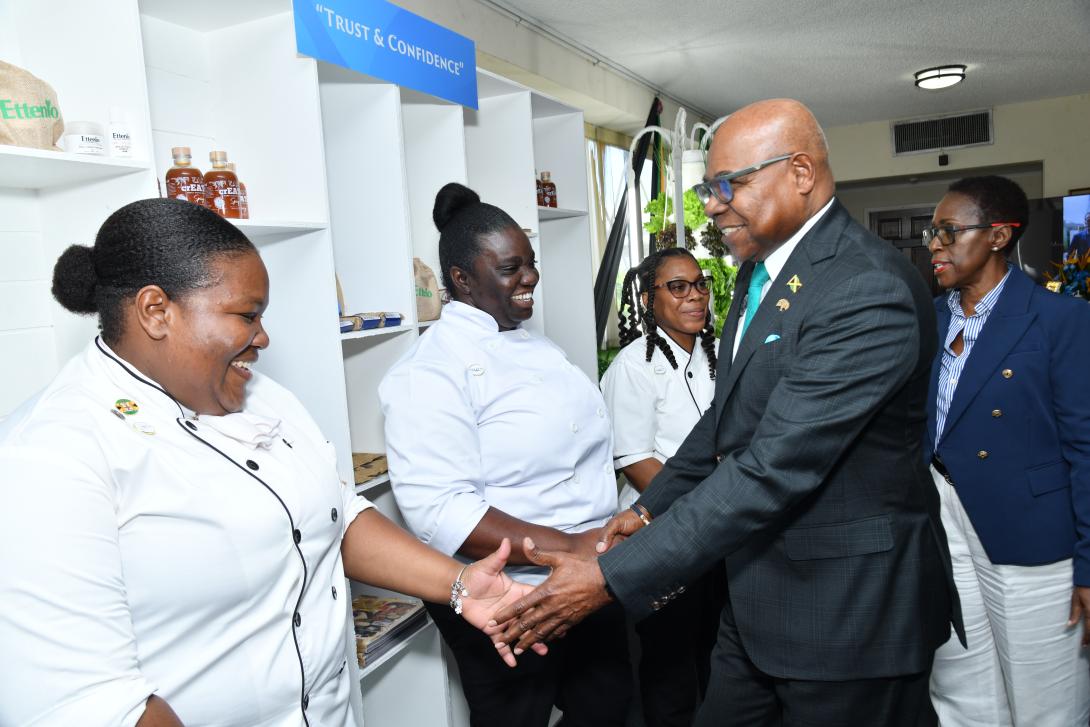
Bartlett Declares New Era Built on Trust, Inclusion and Local Prosperity
KINGSTON, Jamaica; Thursday, June 25, 2026: Minister of Tourism, Hon. Edmund Bartlett, has unveiled a new growth agenda dubbed: Tourism 3.0, describing it as Jamaica’s new development architecture designed to transform tourism from a successful industry into a more inclusive and resilient national economic engine rooted in trust, confidence and shared prosperity.
Making his 2026 Sectoral Debate Presentation in Gordon House earlier this week, under the theme “Trust and Confidence,” Minister Bartlett positioned Tourism 3.0 as the framework that will guide the next phase of Jamaica’s tourism evolution, one where growth is measured not only by visitor arrivals but by stronger communities, higher local retention, greater resilience and broader economic participation.
“Tourism 3.0 is not a slogan. It is a new development architecture for Jamaica,” Bartlett declared.
“The future we now pursue is not merely a larger tourism sector. It is a stronger Jamaican economy. That is the central proposition of Tourism 3.0: tourism must not merely grow in Jamaica. Tourism must grow Jamaica,” he stressed.
Minister Bartlett explained that Tourism 3.0 redefines tourism as an integrated economy where agriculture, manufacturing, logistics, culture, technology, transport, finance, education and community enterprise connect directly to global demand through the visitor experience.
At the centre of this shift is a deliberate focus on retaining more tourism value in Jamaica, creating stronger supply chains and ensuring that more Jamaicans own, supply and benefit from the sector.
The tourism minister also announced accelerated advancement of the Local First Policy, which is intended to strengthen domestic sourcing and reduce import leakage across the tourism economy.
“Local First is not a policy of exclusion. It is a policy of empowerment. It says that where Jamaicans can grow it, make it, cook it, build it, perform it, package it, transport it, digitize it, design it or deliver it, Jamaicans must have a fair chance to supply it,” Bartlett stated.
He revealed that the policy is expected to be completed before the end of the current fiscal year and will support expanded opportunities for local suppliers and micro, small and medium-sized enterprises.
Supporting that objective is the development of the Tourism Supply Logistics Centre, which Bartlett described as a transformational initiative that will become the operating system for Jamaica’s tourism supply economy and the country’s fifth industry-specific Special Economic Zone (SEZ).
Minister Bartlett revealed that agreement has been reached with the Ministry of Industry, Investment and Commerce and the Ministry of Agriculture, Fisheries and Mining to collaborate on implementation.
The centre is expected to connect tourism demand with Jamaican production through improved procurement, forecasting, warehousing, cold-chain services and supplier coordination, positioning Jamaica as the regional pilot and logistics platform for tourism supply coordination across the Caribbean.
Tourism 3.0 also places strong emphasis on preparing workers for the future economy.
In a major workforce development announcement, Bartlett disclosed that artificial intelligence will be integrated into foreign-language training for tourism workers to strengthen communication and service delivery across expanding global markets.
“The worker of the future must not fear technology. The worker of the future must be empowered by technology,” Bartlett said. He added: “The objective is not technology for technology’s sake. The objective is better service, stronger confidence, higher employability and greater upward mobility for Jamaican workers.”
Positioning Tourism 3.0 within the broader national agenda, Bartlett underscored that Jamaica’s competitiveness will increasingly depend on maintaining public trust and demonstrating that tourism growth delivers visible outcomes.
“Confidence brings people here. Trust brings them back. Trust encourages investment. Trust strengthens belief in the sector. And trust secures the future,” he noted.